Validate Drying Time Under Real Care Conditions
Validate Drying Time Under Real Care Conditions. Product developers, QA and procurement teams
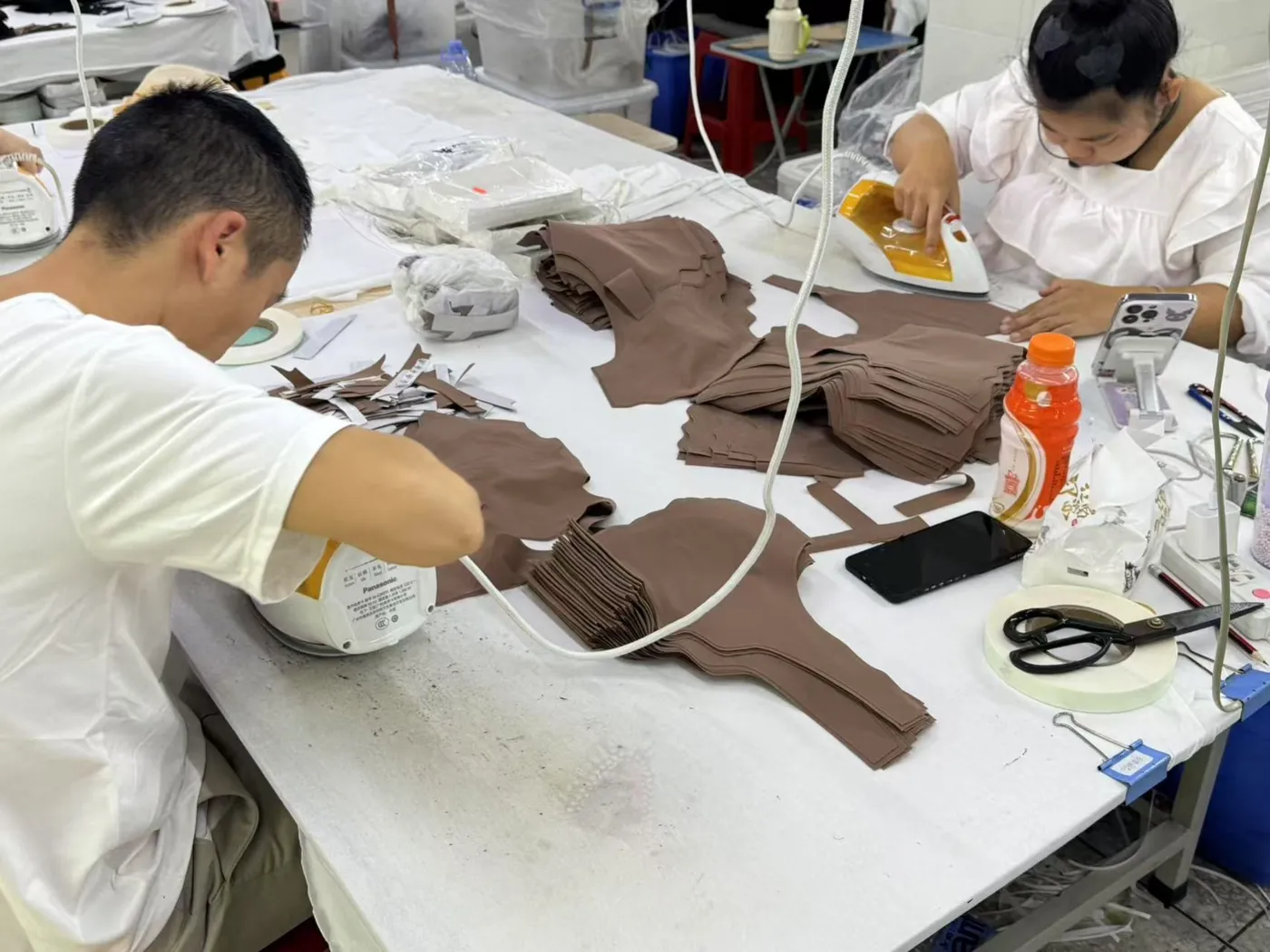
Validate Drying Time Under Real Care Conditions answers practical questions for product developers, QA and procurement teams about drying time, humidity, temperature, endpoint and repeated-wash conditioning, and links the brief, evidence file and approved production specification.
Why dry time changes with environment
Drying time changes with temperature, humidity, airflow and the way the garment is hung. A result from one room should not be presented as a universal drying claim.
Define temperature, humidity and endpoint
Define the starting moisture content, conditioning environment, position of the gusset and endpoint. Weighing at fixed intervals is more reproducible than a visual check of the surface.
Gusset mass and construction variables
Record gusset mass, layer stack, thickness and shell material for every sample. A heavier or more enclosed construction may dry differently even when the skin-contact fabric is the same.
After repeated washing
Test after repeated washing because softeners, fibre swelling and seam changes can alter drying behaviour. Keep the wash and drying protocol identical across samples.
Care instructions and claim limits
Translate the result into realistic care wording only when the test supports it. State the conditions and uncertainty, and avoid claiming quick-dry performance outside the validated use case.
Decision register
| Stage | What to record | Minimum evidence | Dependency |
|---|---|---|---|
| Why dry time changes with environment | Decision, reference and version | approved brief and scope note | BOM, material and certificate scope, test records and sample identity |
| Define temperature, humidity and endpoint | Decision, reference and version | dated specification, BOM or official-source note | BOM, material and certificate scope, test records and sample identity |
| Gusset mass and construction variables | Decision, reference and version | sample, test or registration record for the named reference | BOM, material and certificate scope, test records and sample identity |
| After repeated washing | Decision, reference and version | named approval, exception and change log | BOM, material and certificate scope, test records and sample identity |
| Care instructions and claim limits | Decision, reference and version | RFQ or production-release pack for the next stage | BOM, material and certificate scope, test records and sample identity |
Project file to assemble
- Buyer focus: Product developers, QA and procurement teams.
- Page scope: drying time, humidity, temperature, endpoint and repeated-wash conditioning.
- Evidence to assemble: for drying time, humidity, temperature, endpoint and repeated-wash conditioning, approved brief and scope note; dated specification, BOM or official-source note; sample, test or registration record for the named reference; named approval, exception and change log; RFQ or production-release pack for the next stage.
- External dependencies: BOM, material and certificate scope, test records and sample identity.
- Next step: send a dated brief covering drying time, humidity, temperature, endpoint and repeated-wash conditioning, the destination market and available documents for a feasibility review.
Buyer questions
What makes “Why dry time changes with environment” a usable test?
For drying time, humidity, temperature, endpoint and repeated-wash conditioning: A usable test names the sample and version, BOM, method, units, conditioning, dose or load, number of repeats and acceptance rule. Results without those fields are difficult to reproduce or compare.
Can “Define temperature, humidity and endpoint” be approved from one sample?
For drying time, humidity, temperature, endpoint and repeated-wash conditioning: Only for the version tested. The approval should state which size, colour, material and process were covered, and which production variation still needs verification.
When should the test be repeated?
For drying time, humidity, temperature, endpoint and repeated-wash conditioning: Repeat it after a material, film, adhesive, seam, laundry instruction, supplier or construction change, or when the finished-garment sample differs from the tested specimen.
Related routes
Editorial review: 8 November 2026. This page describes a procurement method and does not replace legal, tax or regulatory advice.
Have a style in mind?
Send a sketch, tech pack or reference garment. We will reply with a development route.