Absorbent Gusset Construction for Period Underwear
A period panty is a garment with an engineered gusset. The gusset decides how much it holds, how it feels and how it lasts.
The Layer Stack
| Layer | Job |
|---|---|
| Skin-contact layer | Feels soft, draws fluid inward |
| Absorbent core | Holds fluid |
| Leak barrier | Stops fluid reaching the outer fabric |
| Outer shell | Gives look, stretch and fit |
Some styles use three layers. Others use four or five, depending on the capacity goal and the garment.
Joining the Layers
Layers can be sewn or bonded with heat-press bonding. The method affects bulk, edge feel and wash durability, and we choose it with your style.
Capacity
Capacity is a design target, not a fixed number. We build the sample around your goal and test the finished sample. We recommend that brands only claim a figure that a test supports.
Wash Durability
We check how the gusset behaves after washing during sampling, and we can discuss the wash test you need for your market.
In-House Process
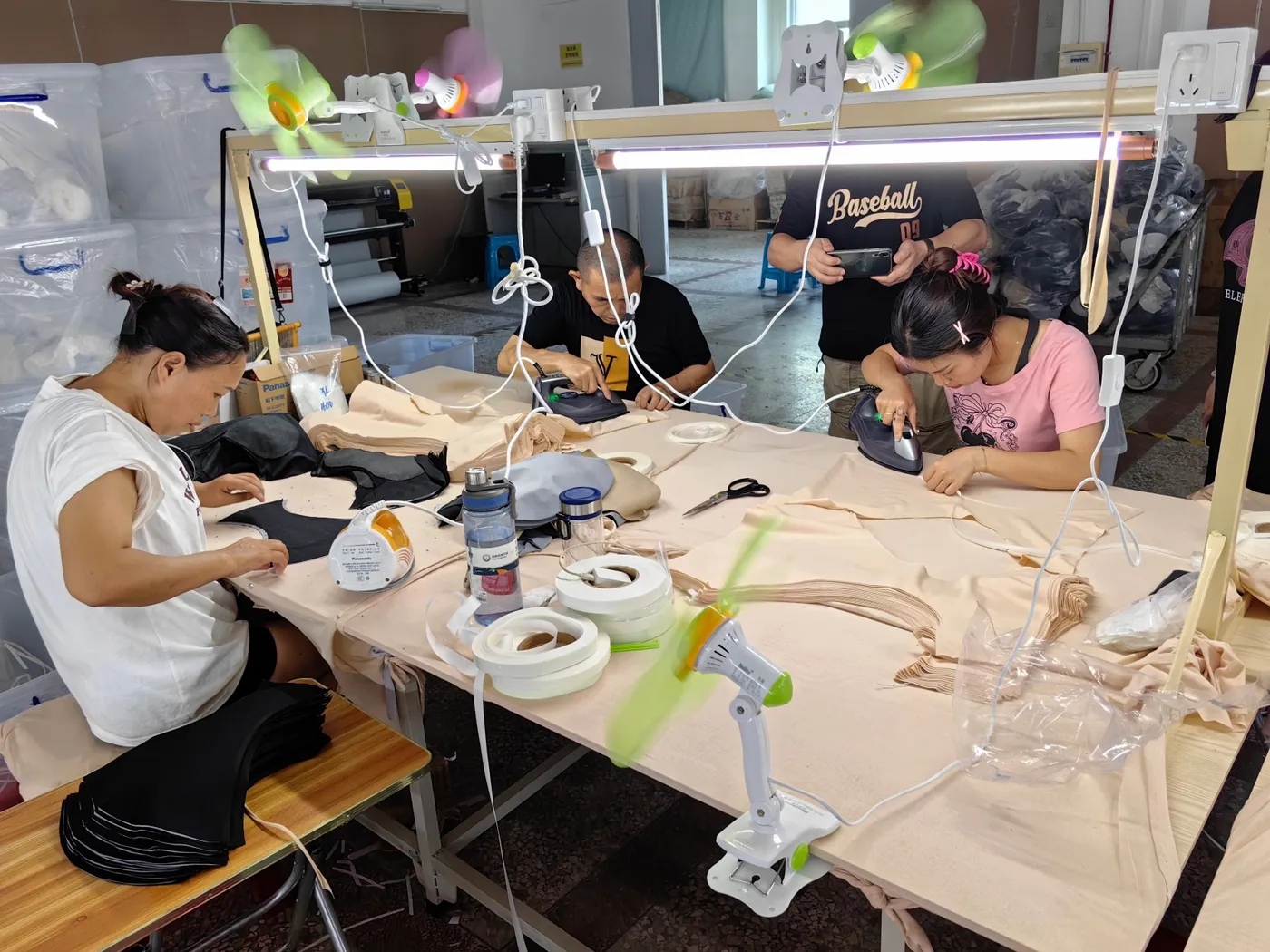
Pattern making and cutting, fabric inspection, pre-shrinking, heat-press bonding, sewing, absorbency testing and packing take place within our Shenzhen factory.
Go deeper into the gusset specification
These technical routes explain the decisions that change capacity, comfort and wash performance.
- Three-layer gusset
- Four-layer gusset
- TPU vs PUL
- Absorbent core materials
- Sewn vs bonded
- Wash durability
- Capacity testing
Period underwear construction questions
How many layers should a period panty gusset have?
It depends on the flow target, silhouette and bulk budget. Layer count alone is not a performance standard; the material sequence and finished-garment testing matter more.
Can the gusset capacity be customised?
Yes. We set the construction around the intended use, then test the finished sample. We avoid publishing a generic millilitre rating without a report for that style.
Should we use TPU or PUL for the barrier?
Compare the exact materials on bulk, handfeel, stretch, wash durability and documentation. Neither acronym alone establishes PFAS-free status.
What should be tested before bulk?
Review fit, gusset flatness, barrier placement, wash behaviour and any performance claim on the finished sample.
Leakproof Period Underwear Manufacturer
Define “leakproof” as a test programme
“Leakproof” is not a universal material property. It is a claim about the finished garment under defined conditions. The brief should state the intended use, flow level, wear duration and test method. We then build the layer stack and barrier placement around that target.
The barrier is one part of the system
A waterproof membrane can stop fluid passing through, but it does not by itself control capacity, wicking, odour, drying or edge comfort. The skin-contact layer, absorbent core, barrier and outer shell need to work together.
Period Underwear Layers Explained
The Four Roles
- Skin-contact layer: soft, moisture-wicking, draws fluid inward
- Absorbent core: holds fluid
- Leak barrier: a waterproof membrane that stops fluid reaching the outer fabric
- Outer shell: the visible garment fabric
How Many Layers?
Three-layer builds are thinner and suit lighter days. Four- and five-layer builds hold more and suit heavier days and nights.
Four-Layer Period Underwear Gusset Development
Why a four-layer build is chosen
A four-layer construction can give a brand more room to separate the jobs of feeling dry, holding fluid, blocking moisture and creating the outer look. That does not automatically make it better. The benefit depends on the chosen materials, the thickness budget and the way the layers are joined.
Period Underwear Absorbent Core Materials
The core has a narrow job with broad consequences
The absorbent core takes fluid away from the skin-contact layer and holds it long enough for the product to work as intended. Its fibre type, loft, thickness and area affect capacity, drying time, gusset bulk and the feel of the finished garment.
Specify a performance target
Instead of asking for a “standard absorbent layer”, state the intended use and what the customer expects: a short daily backup, a moderate workday, a heavy-flow evening or overnight wear. We translate that into a sample target and a test plan.
Reusable Period Underwear Manufacturer
Design for the second, tenth and thirtieth wash
A reusable product has to retain fit, comfort and function after repeated laundering. That makes wash durability a development requirement, not a final inspection item. Fabric shrinkage, elastic recovery, gusset delamination, colour change and print cracking all matter.
The customer proposition
Reusable period underwear competes with an established disposable habit. The product needs a clear use case, practical care instructions and believable performance.
Sewn vs Bonded Period Underwear Construction
Why the joining method matters
Sewing and bonding create different edges, different bulk profiles and different failure modes. A sewn gusset may be familiar and repairable in a conventional garment line; a bonded gusset can create a flatter edge and a more seamless look. Neither method is automatically better without the intended fabric and use case.
TPU vs PUL for Period Underwear
Two ways to create a barrier
TPU film and PUL are both used as leak-barrier components, but they are not interchangeable names for the same material. TPU is a thermoplastic polyurethane film; PUL generally describes a fabric with a polyurethane coating or laminate. The actual construction, thickness, supplier specification and finish determine how the final garment behaves.
Have a style in mind?
Send a sketch, tech pack or reference garment. We will reply with a development route.